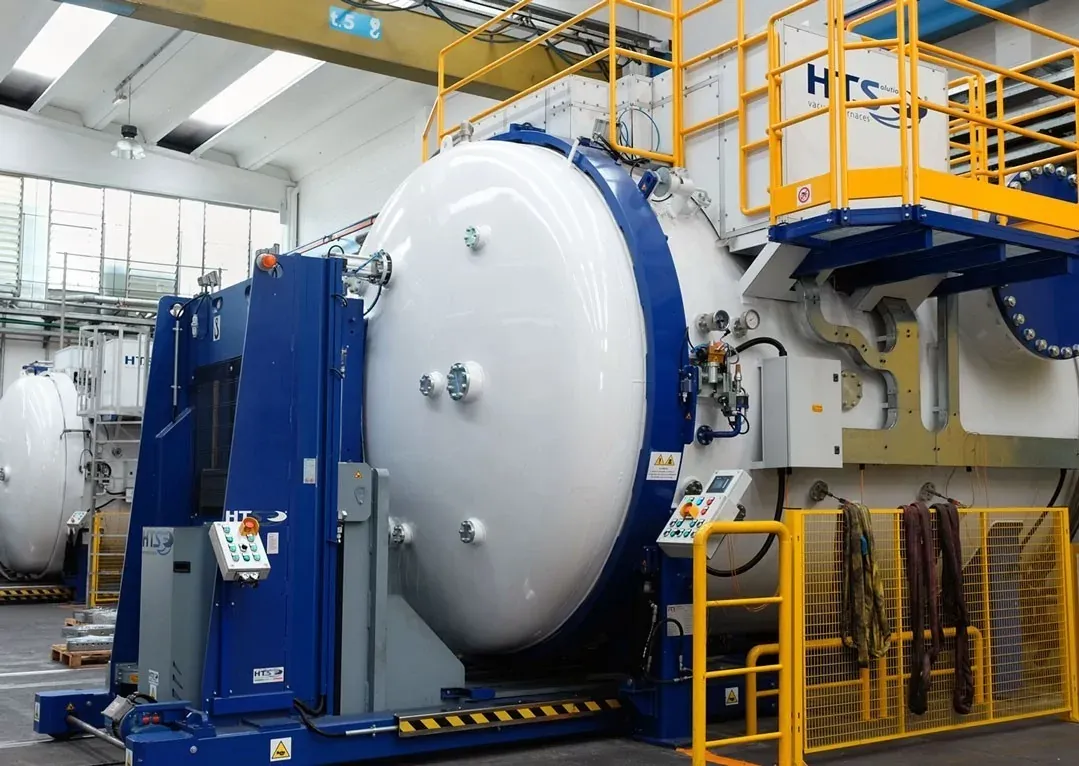
Vacuum hardening furnaces are an advanced technology used in multiple industries. These furnaces make it possible to obtain a precise and homogeneous heat treatment on materials, ensuring superior mechanical properties compared to other hardening processes. In this article, we will explore the benefits of using vacuum hardening furnaces, the technology applied for 3D printing and tempering, as well as how to choose the furnace that best suits your needs.
What are vacuum hardening furnaces and how do they work?
Vacuum quenching furnaces are special equipment used for the heat treatment of materials. These furnaces are designed to work in an airless environment, with temperatures that can exceed 1000°C. During the vacuum quenching process, the material is heated to a specific temperature and then cooled rapidly using inert gases such as nitrogen or argon. This process ensures greater uniformity in heat distribution and prevents the formation of oxides on the surface of the material. In addition, the vacuum prevents contamination of the material by airborne oxygen. The use of vacuum hardening furnaces is very common in the aerospace, automotive and medical industries, where precision and material quality are critical. The operation of vacuum hardening furnaces requires specialized skills and experience to ensure optimal results.
The Advantages of Using Vacuum HARDENING Furnaces
Vacuum hardening furnaces are critical tools for many companies that work with metal materials. Among the main advantages of using these furnaces is the ability to create an oxygen-free environment, which greatly reduces the risk of oxidation of materials and ensures greater purity of the final product. In addition, thanks to the ability to precisely control the temperature and pressure inside the furnace, it is possible to achieve greater uniformity in temperature distribution and therefore greater accuracy in the final results. Finally, these furnaces also allow you to work with a wide range of materials, including those that are more delicate or difficult to treat, always ensuring superior quality in the hardening process. In summary, the use of vacuum hardening furnaces represents an important investment for companies looking to ensure the highest quality of their products.
The technology of vacuum hardening furnaces for printing
The technology of vacuum hardening furnaces for printing represents an innovative and increasingly widespread solution in the production of precision mechanical components. Thanks to the ability to maintain a constant temperature throughout the cooling process, these ovens make it possible to obtain products with superior technical characteristics compared to other processing methods. In addition, the use of vacuum hardening furnaces makes it possible to avoid oxidation or decarburization of the material during heat treatment, thus preserving the mechanical properties of the alloy used. These ovens can also be used in the field of 3D printing, as they allow you to precisely control the temperature and cooling process of the melted material, improving the quality of the final product.
Tempering and heat treatment in high and low vacuum
High and low vacuum tempering and heat treatment are critical processes for the production of high-quality mechanical components. Tempering is a heat treatment that consists of heating a previously hardened component to a temperature lower than the quenching temperature, keeping it at that temperature for a defined time and then cooling it slowly. This process reduces the brittleness of the hardened component and increases its ductility. On the other hand, high and low vacuum heat treatment is a quenching process that is carried out in a vacuum chamber, where the atmosphere is removed or replaced with an inert gas. This type of process ensures greater homogeneity of the surface hardness of the component, without the introduction of impurities. In addition, high and low vacuum heat treatment prevents oxidation of the component during the quenching process, ensuring a defect-free surface finish.
In this article, we have explored vacuum quenching furnaces and their advanced technology. We have seen how these furnaces can offer numerous advantages, such as increasing the mechanical strength of materials and the possibility of obtaining parts with greater dimensional accuracy. In addition, we looked at the application of these furnaces in 3D printing and the role they play in the tempering and heat treatment process. Choosing the vacuum hardening furnace that best suits your needs can be a complex operation, it is essential to obtain the best results by choosing a reliable partner such as HTS Furnaces.